
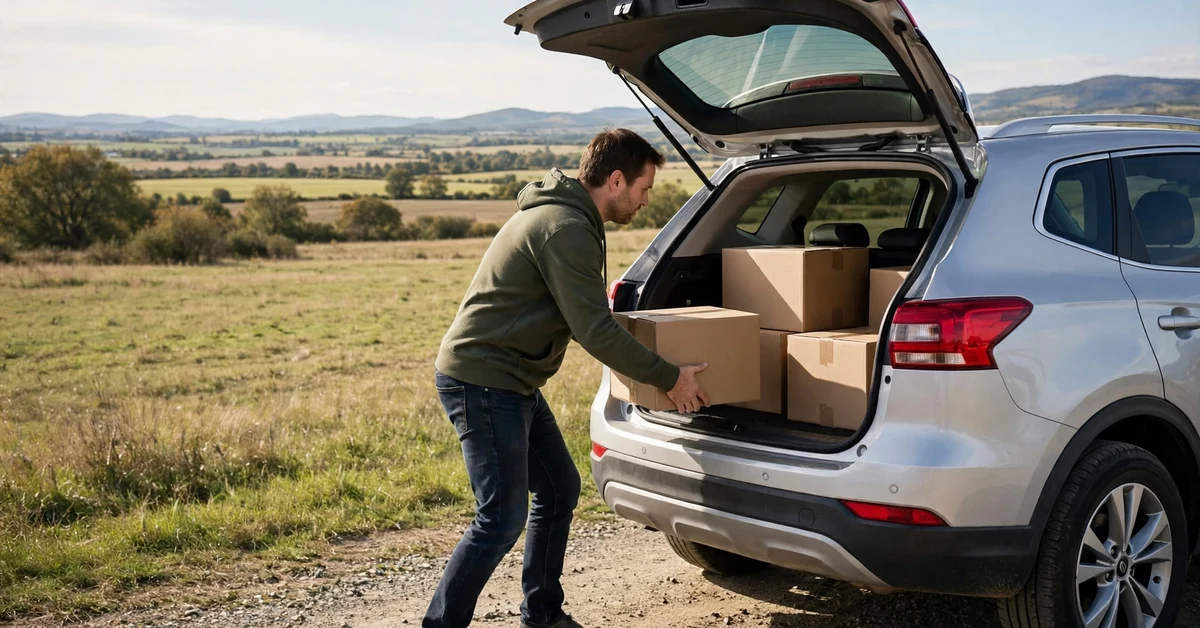
The phrase Rena Monrovia when you transport something by car confuses many readers. Some websites call Rena Monrovia a transport expert. Others call it a company or a new idea. No official source confirms any of those claims, so this guide from DonglyTech sticks to facts you can check. You will learn the real story behind the words Rena and Monrovia, why people mix up cargo and shipment, what transport by car really means, and how to move goods by car safely step by step. Whether you move house, deliver goods for a small business, or carry tools to a work site, the same simple safety rules protect your load, your car, and everyone else on the road.
Table of Contents
What Does Rena Monrovia When You Transport Something by Car Mean?
The full phrase has no verified official source. No government office, transport body, or well known company uses Rena Monrovia as the name of a person, a service, or a rule. Many small blogs repeat the phrase, but they do not agree with each other. One blog calls Rena Monrovia a logistics expert. Another calls it a modern platform. A third calls it a way of thinking about transport. When sources disagree this much and none shows proof, do not treat the phrase as a real name or brand.
The useful part of the phrase is the plain idea inside it. When you transport something by car, you move goods from one place to another in a car, van, or pickup. You stay responsible for the load, the car, and the safety of people on the road. That simple idea matters far more than the mystery name attached to it.
This guide splits the phrase into two parts. First, it explains the real and checkable story behind the words Rena and Monrovia. Second, it shows you how to transport something by car in a safe and simple way.
The Real Story Behind the Words Rena and Monrovia
The words Rena and Monrovia both link to a real ship story. The MV Rena was a large container ship that flew the flag of Liberia. In the early hours of 5 October 2011, the ship hit the Astrolabe Reef off the Bay of Plenty coast in New Zealand, near Tauranga. The ship carried 1,368 containers and about 1,700 tonnes of heavy fuel oil. Rough weather then pushed oil and containers into the sea, and the ship broke apart over time. You can read the key facts in this Maritime NZ report on the Rena grounding.
Investigators later found that the ship officers had ignored basic navigation practice and had left the approved course while they hurried to reach port. The master and the navigation officer later went to prison for seven months. The lesson is clear. When people rush and skip safety steps, a normal trip can turn into a disaster.
Monrovia is the capital and largest city of Liberia, a country in West Africa. Liberia runs one of the largest ship registries in the world. Ship owners from many countries register their ships under the Liberian flag, and Monrovia appears as the home port on those ships. The MV Rena was one of those ships, which is why the names Rena and Monrovia show up together. You can read more about the city on the Monrovia page on Wikipedia.
So the honest answer is simple. Rena was a real ship. Monrovia is a real city and a real ship registry port. No verified source shows a transport expert or company named Rena Monrovia. Treat any blog that invents a life story for that name with care.
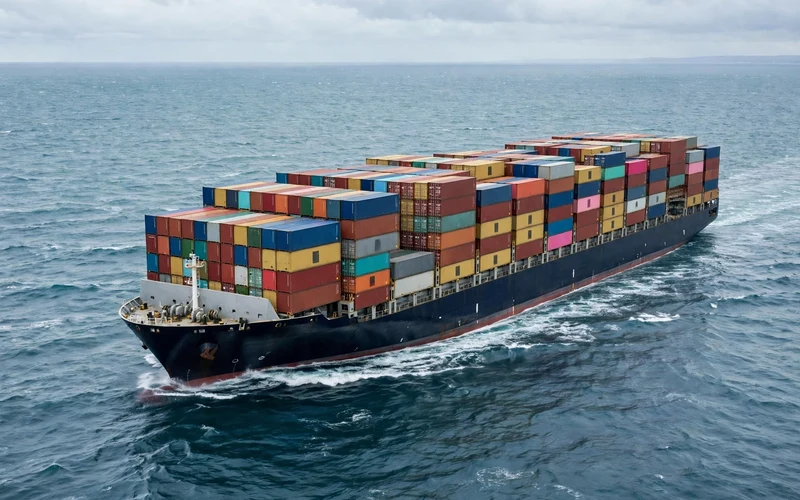
The MV Rena was a real Liberian flagged container ship, and Monrovia is the capital of Liberia.
Why People Mix Up Cargo and Shipment
The second half of the phrase links to a popular word joke. People often say that when you transport something by car, it is called a shipment, but when you transport something by ship, it is called cargo. The joke works because the words feel the wrong way round.
The true word history is more interesting. The word cargo comes from the Spanish word cargo, which means burden, from cargar, which means to load. The root goes back to a Latin word for a wagon or cart, and the English word car shares that same root. The word shipment joins ship with a common ending, but today people use shipment for goods sent by road, air, or sea. The joke is fun, but both words now cover goods moved by many kinds of transport.
For your own trips, the label matters less than the load. Call it cargo, freight, or a shipment if you like. What matters is that you pack it well, secure it well, and drive with care.
What It Means to Transport Something by Car
To transport something by car means to move goods, tools, furniture, or personal items from one place to another in a car or similar vehicle. People do this every day for many reasons:
- Moving house and carrying boxes, clothes, and small furniture.
- Delivering goods for a small shop or online business.
- Taking tools or equipment to a work site.
- Carrying groceries, luggage, or sports gear on a trip.
- Moving fragile items that need extra care on the road.
A car gives you freedom because you choose the time and the route. But a car also has limits. Every car has a maximum load weight and a fixed cargo space, and handling changes when you add weight. Safe car transport respects those limits every time.
How to Transport Something by Car Safely Step by Step
Use these simple steps each time you load a car for a trip. They take a few extra minutes and prevent most common problems.
- Check the load limit. Open your car manual and find the maximum payload for your model. Never load more than that limit.
- Pick the right vehicle. Use a sedan for small boxes, an SUV or van for medium loads, and a pickup or trailer for large or heavy items.
- Pack items in strong boxes. Fill empty space with soft material so items cannot slide or knock together.
- Protect fragile goods. Wrap glass, screens, and electronics in blankets, foam, or bubble wrap.
- Load heavy items first. Place the heaviest boxes low and near the middle of the car so the weight stays balanced.
- Secure the load. Use straps, ropes, cargo nets, or tie downs so nothing moves when you brake or turn.
- Keep your view clear. Never block the rear window, mirrors, or driver view with tall items.
- Check the car before you leave. Test the lights, check tyre pressure, and make sure doors and the trunk close fully.
- Plan your route. Choose smooth roads, avoid steep or rough tracks with a heavy load, and plan rest stops on long trips.
- Drive with care. Slow down, keep a longer gap from the car ahead, and take turns gently while you carry a load.
Stop after the first short stretch of road and check the load again. Straps can loosen and boxes can settle. A quick check keeps the rest of the trip calm.
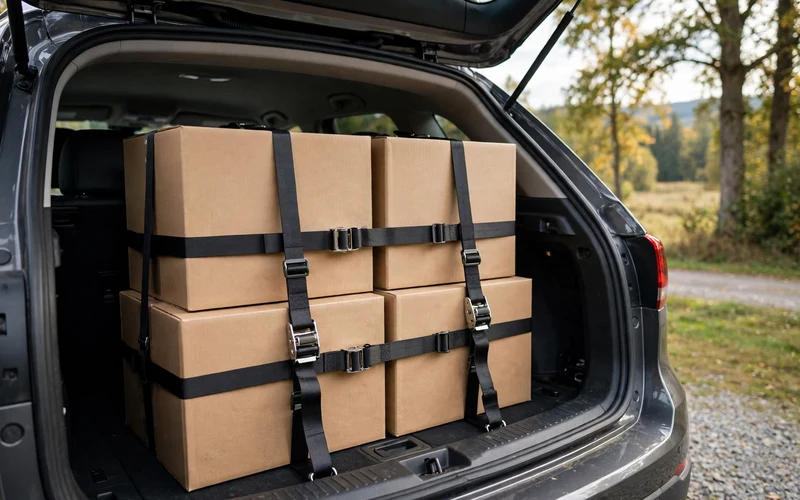
Heavy boxes sit low and near the middle, and straps stop the load from sliding.
Common Mistakes to Avoid When You Transport Something by Car
Most load damage and road trouble comes from a short list of mistakes. Avoid these errors and your trips will go more smoothly:
- Overloading the car because one extra box seems harmless.
- Placing all the weight on one side or high above the seats.
- Leaving loose items free to slide, roll, or fly forward in a sudden stop.
- Blocking mirrors or windows with tall or wide items.
- Driving at normal speed with a heavy or tall load on the roof.
- Skipping a basic car check before a long loaded trip.
- Rushing to reach the destination, just as the Rena officers rushed to reach port.
The Rena story shows where rushing leads. On the road, the same rule applies. A load that arrives a little late beats a load that never arrives at all.
Rena Monrovia and Safe Car Transport: Key Lessons
Even though no official source confirms a person or company called Rena Monrovia, the phrase still points to real lessons. The Rena grounding teaches you to follow the plan, respect safety steps, and never trade care for speed. The Monrovia registry story reminds you that transport runs on rules and clear responsibility. And the cargo and shipment wordplay reminds you to focus on the load itself, not on fancy labels.
If you enjoy simple guides that explain confusing phrases in plain words, see our guide to Geekzilla Autos and our explainer on Techgues com. Both follow the same rule: check the facts first, then explain them in simple English.
Final Thoughts
Rena Monrovia when you transport something by car is a confusing phrase with no verified official source behind the name. The checkable facts are simple: the MV Rena was a real Liberian flagged ship that grounded near Tauranga in 2011, Monrovia is the capital of Liberia and a major ship registry port, and cargo and shipment are old words with a fun history. The practical lesson matters most. When you transport something by car, check the limit, pack with care, balance and secure the load, and drive calmly.
FAQs
Is Rena Monrovia a real person or company?
No verified official source confirms a transport expert or company named Rena Monrovia. Many small blogs use the name in different ways, but none of them shows proof. Treat life stories about that name with care.
What was the MV Rena?
The MV Rena was a large Liberian flagged container ship. It hit the Astrolabe Reef near Tauranga in New Zealand on 5 October 2011 while it carried 1,368 containers and about 1,700 tonnes of heavy fuel oil.
What is Monrovia?
Monrovia is the capital and largest city of Liberia in West Africa. Liberia runs a large ship registry, so Monrovia appears as the home port on many ships around the world, including the MV Rena.
Why do people say cargo for ships and shipment for cars?
It is a word joke. Cargo sounds like it should link to cars, and shipment sounds like it should link to ships. In truth, cargo comes from an old word for loading a wagon, and shipment now covers goods sent by road, air, or sea.
How do I transport something by car safely?
Check your car load limit, pack items in strong boxes, place heavy boxes low and near the middle, secure everything with straps or nets, keep your view clear, and drive slowly. Stop early in the trip to check the load again.
